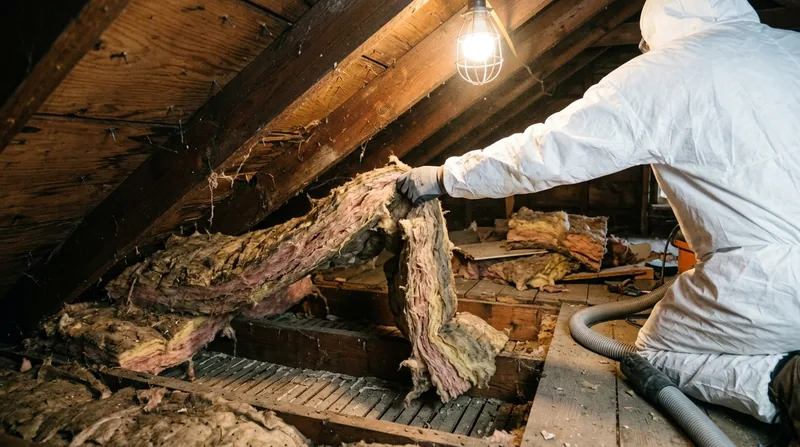




Old insulation in Syracuse homes often fails silently. Compressed fiberglass in 1900s balloon-frame houses in Eastwood and Tipperary Hill, rodent-damaged cellulose in mid-century capes across Liverpool and Camillus, and moisture-laden batts in finished attic rooms that were never properly sealed all bleed heat into the Central New York winter. Before any new spray foam insulation goes in, that failed material has to come out. Insulation removal in Syracuse is the essential first step of every retrofit, and doing it right means the new foam will perform as designed. We vacuum out old fiberglass, cellulose, and contaminated insulation from attics, knee walls, and rim joists across Onondaga County, leaving a clean substrate ready for attic spray foam insulation or other air-sealing work.
Why Insulation Removal Matters in Syracuse's Aging Housing Stock
Syracuse sits in IECC climate zone 5A, where long winters and heavy lake-effect snow create a brutal test for attic insulation. Heat rising from living spaces melts snow on the roof from below, that meltwater refreezes at the eaves, and ice dams form year after year. The insulation that was supposed to stop that heat loss is often too compressed to do its job anymore, or it has absorbed moisture and lost its R-value entirely. Early-1900s houses with balloon framing and uninsulated wall cavities, mid-century ranches with flattened attic insulation, and platform-frame homes built in the last twenty years all face the same pressure: warm interior air rises, moisture condenses in cold attics, and old insulation deteriorates from the inside out. Removing that failed material is not optional cosmetic work; it is the precondition of a thermal envelope that actually performs.
- We extract compressed or damp fiberglass from attics without disturbing walls or ceilings.
- We vacuum out cellulose insulation from knee walls and finished attic rooms in pre-1950s homes.
- We remove rodent-contaminated insulation and dispose of it properly per local code.
- We leave the framing clean and dry so new foam or air sealing can be applied immediately.
Proper removal prevents the moisture and mold risk that comes from layering new insulation over failed material, and it eliminates the hidden voids and thermal bridges that plague retrofit jobs done halfway.
Local example: A two-story colonial in Westcott with a finished attic room had its original fiberglass compressed to half its original thickness after sixty years. The homeowner felt cold drafts near the knee wall and found moisture stains on the sheathing. We removed the old batts, inspected for water intrusion, dried the framing, and then installed closed-cell spray foam to seal the rim joists and the sloped roof deck. The room stayed warm all winter, and the ice dams stopped forming.
For guidance on what triggers the need for removal in your home, check your local building department's energy code requirements at New York State Department of Environmental Conservation.
How We Remove Old Insulation in Syracuse Attics and Walls
Insulation removal is not a job for a shop vac and a dustpan. We use commercial-grade equipment to extract old fiberglass, cellulose, and mineral wool from attics, knee walls, and wall cavities without spreading contamination through the rest of your home. The process is straightforward: we set up containment, run a vacuum hose to the removal area, extract the material, and bag it for proper disposal. We inspect the framing as we go, looking for water damage, rodent entry, or mold that would require remediation before any new insulation is installed. Once the space is clean and dry, we document what we found and what needs attention before the next phase begins.
- We set up negative air containment to prevent dust and debris from entering occupied spaces.
- We extract old insulation using commercial vacuum equipment and seal it in disposal bags.
- We inspect framing, sheathing, and structural members for water damage or pest damage during removal.
- We document findings with photos and notes so you know exactly what condition the space was in.
- We haul away all removed material and dispose of it at a licensed facility.
This methodical approach means the attic or wall cavity is ready for spray foam, blown-in insulation, or air-sealing work without hidden problems lurking underneath.
Real scenario: A ranch in DeWitt had cellulose blown into the attic in the 1990s. By 2024, it had settled to four inches in some spots and was damp from a slow roof leak near the chimney flashing. We removed all the cellulose, found and marked the leak location for the roofer, dried the framing with portable fans, and left the homeowner with a clean attic ready for new closed-cell spray foam and proper ventilation controls.
| Removal Method | Description | Best For |
|---|---|---|
| Vacuum Extraction | Commercial-grade vacuum with sealed hose removes loose-fill fiberglass or cellulose without dust escape | Attics with blown-in or loose-fill insulation; minimal disruption to living spaces |
| Batt Removal | Manual extraction of fiberglass or mineral wool batts stapled or fitted into cavities, bagged and sealed | Knee walls, finished attic rooms, and wall cavities with batts in early-1900s and mid-century homes |
| Moisture and Contamination Handling | Careful removal of damp or rodent-damaged insulation with framing inspection and documentation | Attics with water stains, mold indicators, or pest damage; homes where substrate condition is unknown |
| Full Substrate Prep | Complete removal, framing drying, air sealing of penetrations, and readiness certification for new foam | Retrofit jobs where new spray foam or air sealing follows immediately; maximum performance guarantee |
Insulation Removal Cost in Syracuse: What to Expect
Insulation removal pricing depends on the volume of material, the condition of what you are removing, access to the space, and what happens next. A straightforward attic with loose-fill fiberglass in good condition may cost less than a knee wall packed with damp cellulose or a basement rim joist lined with old batts and rodent nesting. We start estimates at $950 for a typical single-story attic removal, but a two-story colonial in Eastwood with finished attic rooms and knee walls may run higher because there is more linear footage to access and more potential for moisture or contamination. Multi-level homes, homes with complex framing, and jobs where the insulation is wet or heavily soiled all push cost upward. The best way to know your actual cost is to call for a free estimate so we can see the space, measure it, and give you a firm number before any work starts.
Factors that affect removal cost include attic square footage, the type of insulation being removed (fiberglass, cellulose, mineral wool, or mixed), whether the material is wet or contaminated, accessibility of the space, and whether framing drying or minor repairs are needed before new insulation is installed. A ranch with a single-story attic and loose fiberglass is a straightforward job. A Victorian with balloon framing, multiple attic levels, and settled cellulose will take longer and cost more. Getting 2 or 3 estimates from local contractors gives you a realistic range and helps you spot any estimate that is suspiciously low (which often signals cut corners on containment or disposal) or suspiciously high (which may mean the contractor is padding the job). We provide detailed pricing guidance once we have seen your attic in person.
What to Look for When Hiring an Insulation Removal Contractor Near Me in Syracuse
Insulation removal is a trade skill that many general contractors claim but few do well. A contractor who shows up with a shop vac and a trash bag, promises to have you cleaned out by lunch, and leaves dust in your HVAC ducts is not the contractor you want. The right contractor in Syracuse is fully insured, sets up proper containment before the first piece of old insulation is touched, documents what they find, and disposes of material at a licensed facility. They will answer questions about what they found during removal, explain why the old insulation failed, and tell you plainly whether your framing needs drying time or minor repair before new foam or blown-in insulation is installed. They will also be transparent about permits: some municipalities in the Greater Syracuse area require a permit for attic work, and others do not, but a contractor who knows your local building department and can tell you what applies at your address is the one who has done this work locally before.
When you call contractors near you for removal quotes, ask these questions: Are you fully insured? Can you show me your insurance certificate? Do you set up containment before removal starts? What do you do with the old material, and where does it go? Will you inspect the framing and document what you find? Do you know what permits apply in my city? Can you provide references from other Syracuse-area homeowners? A contractor who answers all of these directly and without hesitation is the one to hire. Contact us for a free estimate at (315) 907-4259, and we will walk you through the entire process before any commitment is made.
Insulation Removal in Syracuse: Pricing Guide
| Service | Price | Details |
|---|---|---|
| Single-story attic removal | Starting at $950 | Loose-fill fiberglass extraction from typical 1,000 to 1,500 sq ft attic, disposal included |
| Multi-story or complex attic removal | Starting at $1,400 | Knee walls, finished attic rooms, or balloon-frame homes with multiple access points and higher labor |
| Damp or contaminated insulation removal | Starting at $1,200 | Moisture-damaged or rodent-soiled material requiring careful handling, framing inspection, and documentation |
| Full attic prep with framing drying | On estimate | Removal plus containment setup, framing drying time, air sealing of penetrations, ready for new foam |
| Travel and estimate | Included and free | No mileage fee or travel charge within Syracuse and surrounding Onondaga County service area |
Indicative pricing, the exact cost depends on square footage, finish, and site access. Free personalized estimate within 24h at (315) 907-4259.


