Understanding Balloon-Framed Homes in Eastwood and Westcott
If you own a home in Eastwood or Westcott, there's a good chance you live in a balloon-framed structure. Built primarily between the 1920s and 1950s, these charming neighborhoods feature homes with a distinctive construction method that differs significantly from modern platform framing. In balloon framing, wall studs run continuously from the foundation all the way to the roof, creating vertical cavities that connect multiple floors. While this construction method was economical at the time, it presents unique challenges for today's homeowners seeking to improve energy efficiency and comfort.
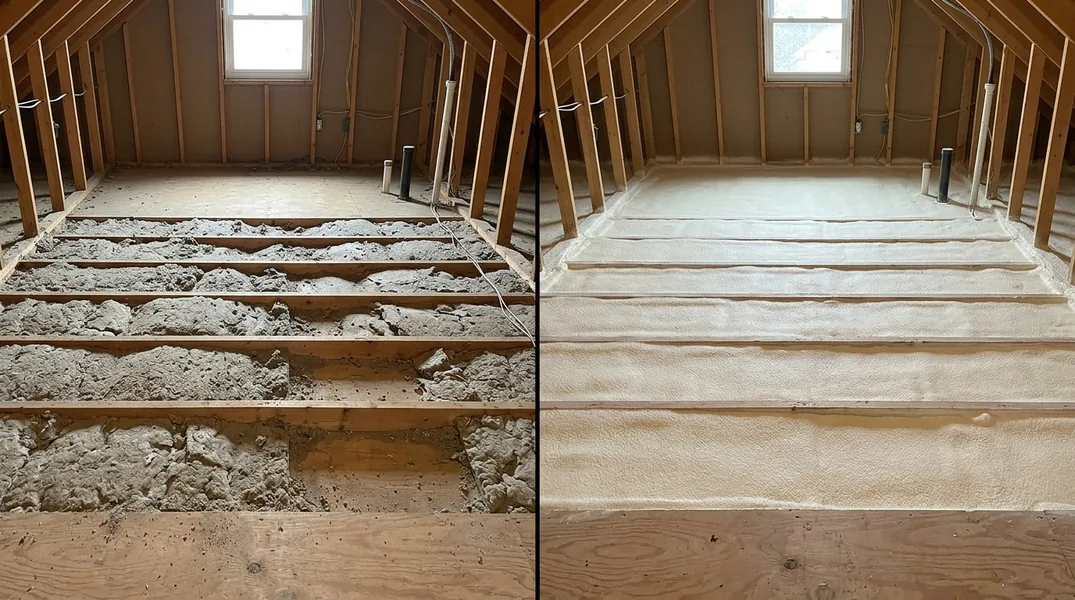
The continuous cavities in balloon-framed homes create what building scientists call a 'thermal highway' for air movement and heat loss. Unlike newer homes with fire blocks and sealed floor cavities, these older structures allow warm air to rise unobstructed through wall cavities, making it nearly impossible to maintain consistent indoor temperatures using traditional insulation methods. This is where Attic Spray Foam Insulation has become an increasingly popular solution for homeowners in Syracuse and surrounding areas looking to address the specific thermal challenges of their older homes.
Is Spray Foam Insulation Worth It for Your Older Home?
When considering whether spray foam insulation is worth the investment, balloon-framed homes present a compelling case. Traditional fiberglass batts and blown-in cellulose struggle to seal the continuous cavities that define these structures, resulting in ongoing energy waste and comfort issues. Spray foam, by contrast, expands to fill every gap, crack, and void, creating an air-tight thermal barrier that dramatically reduces heat transfer. For homeowners in Syracuse experiencing high heating bills and uneven temperature distribution, the energy savings can be substantial enough to justify the upfront investment within five to ten years.
Beyond energy savings, spray foam insulation addresses moisture control and structural integrity concerns that plague older homes. Balloon-framed structures are particularly vulnerable to moisture infiltration through wall cavities, which can lead to mold growth and wood rot. By creating a continuous air and moisture barrier, spray foam protects the structural components of your home while simultaneously improving comfort. Many homeowners also appreciate the added sound dampening and pest resistance that spray foam provides, benefits that traditional insulation simply cannot match. The real value depends on your long-term plans for the home and your current energy costs, but for most balloon-framed homes in older neighborhoods, the answer is yes, it's worth it.
Spray Foam Off Gassing and Safety Concerns: What You Need to Know
One of the most common concerns homeowners raise is whether spray foam insulation is safe, particularly regarding off gassing and chemical emissions. This is a legitimate question that deserves a straightforward answer. During the installation process, spray foam does release volatile organic compounds (VOCs) as the polyurethane and isocyanate components cure. These fumes can cause temporary irritation to eyes, nose, and throat if occupants remain in the home during application. However, professional installers follow strict protocols to minimize exposure, including proper ventilation, containment, and evacuation of residents during and immediately after application.
After the curing period, which typically takes 24 to 48 hours, spray foam becomes inert and poses no ongoing off gassing risk. The chemical reaction that creates the foam is essentially complete, and the material stabilizes into a solid, non-reactive state. Reputable spray foam installers, like those at Syracuse Spray Foam Insulation, ensure proper ventilation and allow adequate curing time before homeowners re-enter treated spaces. If you're concerned about chemical sensitivity or have family members with respiratory conditions, it's essential to discuss these concerns during your free estimate consultation. Professional contractors can recommend precautions and answer specific health-related questions based on your situation.
Spray Foam Insulation Problems and Realistic Expectations
While spray foam offers significant advantages, it's important to understand potential problems and limitations to make an informed decision. One common issue is improper installation, which can result in uneven coverage, incomplete sealing, or inadequate expansion. Poor installation undermines the material's effectiveness and can lead to thermal bridging and air leakage. Additionally, spray foam can sometimes expand excessively or unevenly if application rates aren't carefully controlled, potentially causing structural stress or creating gaps where foam didn't reach. This is why hiring experienced, certified contractors is non-negotiable. Inexperienced installers may also create moisture problems if they seal a wall cavity without accounting for vapor diffusion, trapping moisture inside and promoting mold growth over time.
Another consideration is compatibility with existing building materials. In older balloon-framed homes, spray foam applied directly to certain materials can sometimes cause issues if the substrate isn't properly prepared. Additionally, if you ever need to make repairs or renovations, spray foam can be difficult and expensive to remove. Some homeowners also report concerns about the cost of future modifications to electrical or plumbing systems within spray-foamed cavities. These aren't deal-breakers, but they're factors to weigh when deciding between spray foam and alternatives like Open Cell Spray Foam Insulation or Closed Cell Spray Foam Insulation, each with different performance characteristics and installation considerations.
Spray Foam Insulation Pros and Cons: A Balanced Overview
To help you weigh your options, here's a balanced look at the major advantages and disadvantages. The pros include superior air sealing and R-value per inch, exceptional moisture resistance, improved indoor air quality through reduced infiltration, enhanced structural rigidity, and long-term durability that often exceeds 80 years. For balloon-framed homes where thermal performance is compromised by continuous cavities, these benefits are transformative. Spray foam also eliminates the need for multiple layers of traditional insulation and provides consistent performance across complex architectural details, rim joists, and irregular cavities that plague older homes.
The cons include higher upfront costs compared to traditional insulation, potential off gassing during installation, difficulty with future modifications, and the need for professional installation to avoid costly mistakes. Some homeowners also express environmental concerns about polyurethane-based products, though modern spray foams increasingly use more sustainable blowing agents. Additionally, while spray foam is durable, it can be damaged by UV exposure, moisture, or physical impact if left exposed, so proper encapsulation is essential. For most homeowners in older neighborhoods, the pros significantly outweigh the cons, but your specific situation may differ. The best way to determine whether spray foam is right for your home is to schedule a consultation with experienced professionals who can assess your unique needs and recommend tailored solutions.
Getting Your Free Estimate: Next Steps for Homeowners
If you're ready to explore spray foam insulation for your balloon-framed home in Syracuse, the first step is to schedule a professional evaluation. Syracuse Spray Foam Insulation offers comprehensive assessments that identify problem areas, evaluate your current insulation performance, and recommend the most cost-effective solutions for your specific situation. During a free estimate, our team will discuss your concerns about safety, off gassing, and long-term performance, answer all your questions, and provide transparent pricing based on your home's unique characteristics. We'll also explain the differences between open cell and closed cell options and help you understand which approach makes sense for your budget and goals.
Don't let another winter pass with high heating bills and uneven temperatures. Homes in Eastwood and Westcott deserve insulation solutions that respect their historic character while delivering modern performance. Contact Syracuse Spray Foam Insulation today at (315) 907-4259 to schedule your consultation and take the first step toward a more comfortable, energy-efficient home. Our experienced team is ready to address your questions about spray foam safety, performance, and value, and to help you make the best decision for your family and your home.
Looking for a professional spray foam insulation contractor in Syracuse? Syracuse Spray Foam Insulation responds fast for all your spray foam insulation needs.
Get a Free Quote