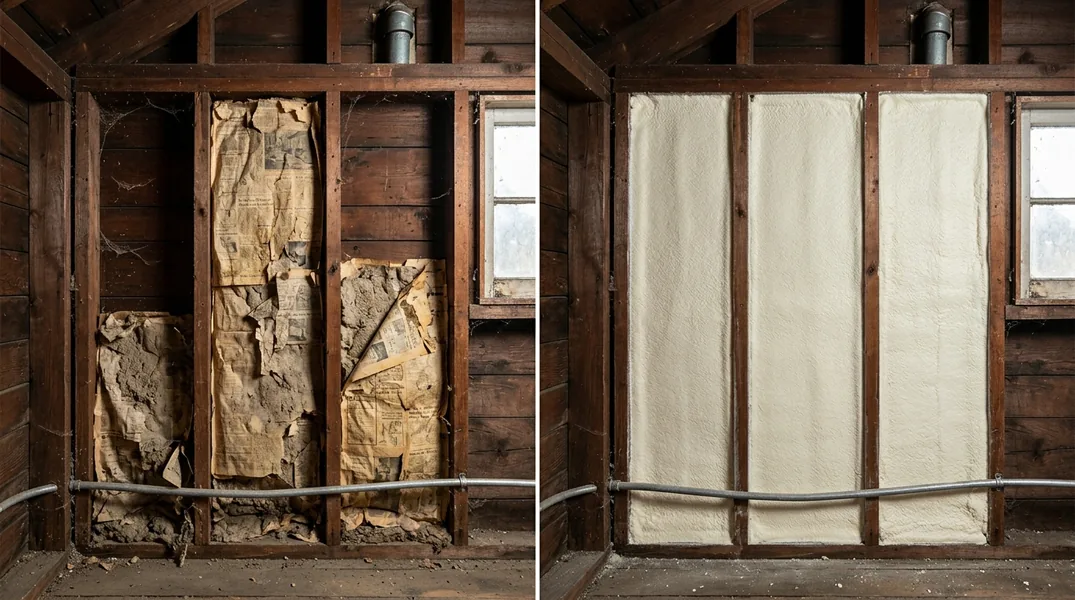
Understanding Open Cell vs Closed Cell Spray Foam
When homeowners in Syracuse start researching Attic Spray Foam Insulation, they quickly discover there are two main types to choose from: open cell and closed cell. These aren't just different products; they have fundamentally different structures, performance characteristics, and ideal applications. Understanding the difference is the first step toward making a smart decision for your home.
Open cell spray foam has a softer, more flexible structure with cells that aren't completely enclosed. Think of it like a sponge where the air pockets are connected. Closed cell spray foam, by contrast, has cells that are completely sealed off from one another, creating a denser, more rigid material. This structural difference drives nearly everything else: how much they cost, how well they insulate, how they handle moisture, and where they work best in your home.
Open Cell Spray Foam: Affordability and Air Sealing
Open Cell Spray Foam Insulation is the more budget-friendly option and offers excellent air sealing properties. Because the cells are open, the foam expands significantly after application, filling every crack, crevice, and irregular space in your attic. This expansion makes it particularly effective at blocking air leaks, which is one of the biggest culprits behind energy loss in older homes throughout De Witt and surrounding areas.
The lower density of open cell foam (typically around 0.5 pounds per cubic foot) means it's lighter and requires less material to insulate a given space. It also has sound-dampening properties, which some homeowners appreciate if they're concerned about noise from wind or weather. However, open cell foam is more permeable to moisture and has a lower R-value per inch than its closed cell counterpart. In Syracuse's humid climate, this is an important consideration, particularly in applications where water exposure is possible.
Closed Cell Spray Foam: Maximum Performance and Moisture Protection
Closed Cell Spray Foam Insulation delivers superior thermal performance and exceptional moisture resistance. Because the cells are sealed, water cannot penetrate the foam, making it ideal for damp environments or areas prone to condensation. The higher density (typically 1.5 to 2 pounds per cubic foot) means closed cell foam provides an R-value of approximately 6 to 7 per inch, compared to open cell's 3.5 to 4 per inch. This means you need less material to achieve the same insulation value.
Closed cell foam also creates a stronger, more rigid barrier that can contribute structural support to your attic or roof assembly. This added rigidity can be beneficial in areas that experience heavy snow loads, which is relevant for homeowners in the Syracuse region during winter months. The trade-off is cost: closed cell foam typically runs 50 to 100 percent more than open cell. For homeowners prioritizing maximum performance and moisture protection, however, the investment often pays dividends in energy savings and long-term durability.
Sealed Attic Insulation: Why the Unvented Approach Works in Syracuse
One of the most important concepts in modern attic insulation is the idea of a sealed attic insulation system, often called an unvented attic. Traditionally, attics were vented to allow moisture to escape, but spray foam changes that equation entirely. When you apply spray foam to the underside of your roof deck, you create an unvented attic that is completely sealed from the outside environment. This approach has become the gold standard for new construction and retrofits across the country.
In Syracuse's climate, where winters are cold and humid summers are common, a unvented attic spray foam system offers multiple benefits. The continuous insulation barrier prevents warm air from escaping in winter and keeps cool conditioned air inside during summer. Because the attic is sealed, moisture from your living space cannot migrate into the attic and cause rot, mold, or structural damage. This is especially valuable in homes with complex rooflines or cathedral ceilings where traditional vented insulation often fails to perform properly.
Attic Spray Foam Insulation Cost in Syracuse: What to Budget
The pricing for spray foam attic insulation varies based on several factors, including the type of foam you choose, the size of your attic, existing conditions, and local labor costs. Open cell foam typically ranges from 40 cents to 60 cents per board foot, while closed cell foam generally costs between 60 cents and $1.50 per board foot. For a typical 1,200 square foot attic, you might spend anywhere from $1,500 to $3,500 with open cell, or $3,000 to $7,000 with closed cell, depending on the desired R-value and local market conditions.
Beyond the material cost, factors like roof access difficulty, attic ventilation removal, and air sealing of penetrations all influence the final price. Many homeowners find that the energy savings from improved insulation pay back the investment within 5 to 10 years, particularly if they're upgrading from older fiberglass batts or blown-in cellulose. Syracuse Spray Foam Insulation offers transparent pricing and can provide a detailed estimate for your specific project. We recommend getting a free estimate from our team so you understand the true cost and potential return on investment for your home.
Which Type Is Right for Your Syracuse Home?
The best choice between open cell and closed cell spray foam depends on your priorities, budget, and specific attic conditions. If you're looking for maximum cost-effectiveness and your primary goal is air sealing and improving thermal comfort, open cell is an excellent choice. It works well in dry attics and delivers solid performance at a lower price point. If moisture is a concern, if you want the highest R-value per inch, or if you're willing to invest more for superior long-term performance, closed cell is the better option.
Many homeowners in Westvale and throughout the Syracuse area choose a hybrid approach: closed cell foam on the roof deck where moisture exposure is highest, combined with open cell in other attic areas to balance performance and cost. Syracuse Spray Foam Insulation can evaluate your home's unique situation and recommend the best solution. Call us at (315) 907-4259 or request a free estimate to discuss your attic insulation needs. We serve homeowners throughout the Syracuse region and can help you achieve the comfort, efficiency, and durability your home deserves.
Looking for a professional spray foam insulation contractor in Syracuse? Syracuse Spray Foam Insulation responds fast for all your spray foam insulation needs.
Get a Free Quote